
El diseño de las aletas determina si un disipador de calor se puede llenar, expulsar y utilizar según lo previsto. Más aletas no siempre son mejores si crean riesgos de fabricación.
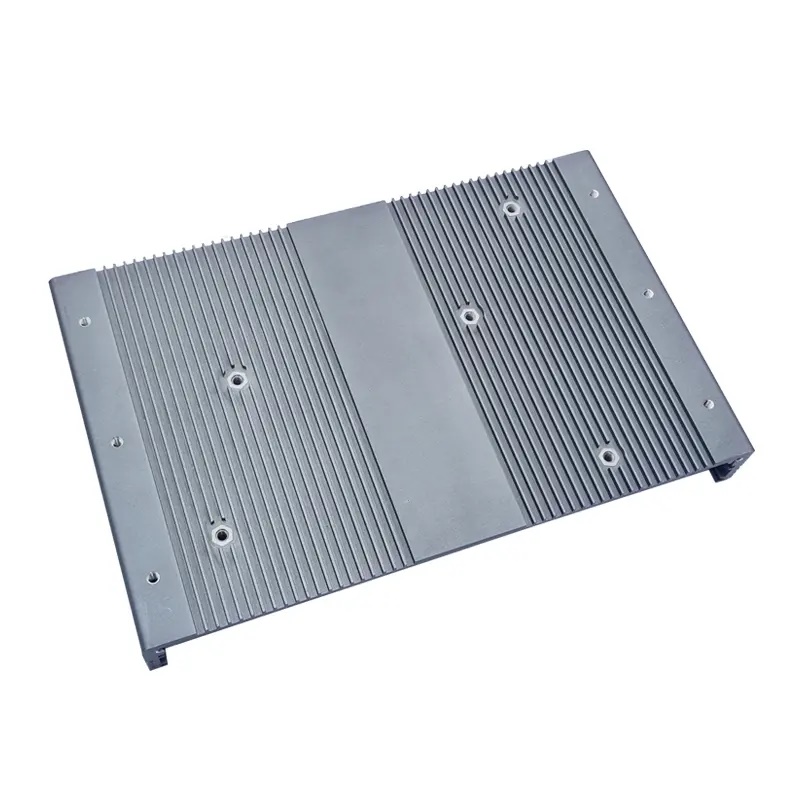
Las piezas del disipador de calor necesitan una superficie térmica, superficies de montaje estables y una calidad de aletas controlada.
| Área de diseño | Riesgo si se ignora | Mejor acción de ingeniería |
|---|---|---|
| espesor de aleta | llenado incompleto o aletas dañadas | revisar espesor mínimo con proveedor |
| ángulo de tiro | expulsión difícil y marcas de aletas | permitir tiro cuando la función lo permita |
| planitud de la base | mal contacto térmico | máquina e inspeccionar las superficies de contacto |
| área de recubrimiento | rendimiento de contacto reducido | marcar caras térmicas sin recubrimiento |
Las aletas delgadas requieren una cuidadosa revisión de la compuerta y la expulsión. Las bases gruesas necesitan enfriamiento y control de contracción.
Huabo preguntaría qué superficie hace contacto con el módulo, qué orificios montan el disipador de calor y si se permite el recubrimiento en el área de contacto.
Proporcione los requisitos de contacto térmico y el método de ensamblaje, no solo las dimensiones exteriores.
Referencia relacionada:placa de disipador de calor de fundición a presión de aluminio,servicio de fundición a presión de aluminioypiezas electrónicas de fundición a presión.
Las aletas delgadas ayudan al área térmica, pero también desafían el flujo del metal y la vida útil del molde. El mejor diseño de disipador de calor equilibra la altura de las aletas, el espaciado, el tiro, el espesor de la base y el mecanizado de la superficie de contacto. Un diseño copiado de la extrusión puede no ser ideal para la fundición a presión porque la dirección de llenado y el método de expulsión son diferentes.
| Característica | Preocupación por el diseño | Revisión de fábrica |
|---|---|---|
| Aletas delgadas | Llenado incompleto o deformación. | Calado, espaciamiento y dirección de puerta. |
| Base térmica | Planitud y resistencia de contacto. | Subsidios de mecanizado e inspección. |
| Jefes de montaje | Concentración de masa del disipador de calor | Riesgo de transición de costillas y contracción. |
Para proyectos nuevos de disipadores de calor, inspeccione tanto las superficies de contacto térmico como la integridad de las aletas en las primeras muestras. Es posible que una pieza fundida visualmente aceptable aún necesite mecanizado o ajuste de diseño para mejorar la transferencia de calor.
Teléfono:+86 18868921505
Correo electrónico:lijianguo@cxhuabo.com
Dirección: Y iheng road, ciudad de Changhe, ciudad de CI, ningbo, provincia de Zhejiang, China

escanear wechat
Copyright © 2022 Cixi Huabo Machinery Co., Ltd
Mapa del sitioEste sitio web utiliza cookies para garantizar que obtenga la mejor experiencia en nuestro sitio web.

 English
 Pусский
 Français
 日本語
日本語



 Whatsapp
 Teléfono
Comentario
(0)