
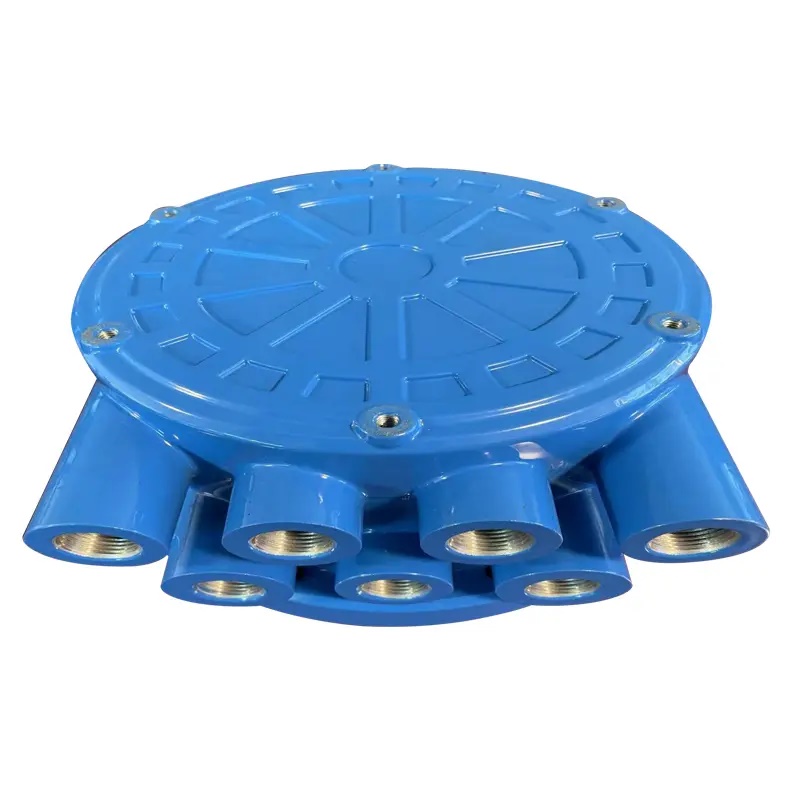
Las carcasas de aparatos eléctricos fabricadas con fundición a presión de aluminio ADC12 suelen necesitar estructura, protección y superficies de montaje estables. El material es común, pero el resultado final depende de cómo se diseña, mecaniza y termina la carcasa.
| Área | Pregunta de revisión |
|---|---|
| Material | ¿Se acepta ADC12 o se especifica otra aleación? |
| Cara de sellado | ¿Necesita mecanizado CNC o solo desbarbado? |
| Entrada de cables | ¿Están definidos los límites de las rebabas y el acabado de los bordes? |
| Revestimiento | ¿Qué agujeros o superficies necesitan enmascararse? |
| Inspección | ¿Qué dimensiones afectan al montaje? |
ADC12 tiene buena moldeabilidad para carcasas, cubiertas y cajas de conexiones. Admite una producción por lotes estable cuando se revisan el espesor de la pared, las nervaduras y las protuberancias antes de la fabricación del molde.
Referencia relacionada:carcasa de caja de conexiones ADC12 pintadaycontrol del proceso de fundición a presión.
| Elección de materiales | Razón típica para usarlo | nota del comprador |
|---|---|---|
| ADC12 | buena moldeabilidad y disponibilidad común | adecuado para muchas carcasas y cubiertas |
| Mordisco0 | también común para fundición a presión de aluminio | confirmar preferencia material regional |
| Aleación personalizada especificada | necesidad mecánica o ambiental especial | puede afectar la cotización y el tiempo de entrega |
Las carcasas de aparatos eléctricos suelen incluir entradas de cables, salientes de tornillos, caras de cubierta y superficies revestidas. Si un hilo o punto de contacto debe permanecer sin recubrir, debe indicarse en el dibujo. Si se requiere una superficie de sellado, se debe analizar el mecanizado y la planitud antes de fabricar el molde.
La inspección debe incluir la apariencia exterior, las dimensiones de montaje, el ajuste de la cubierta, las rebabas alrededor de las aberturas y el estado del revestimiento. Si la carcasa se ensamblará con componentes electrónicos, una verificación del ensamblaje de muestra puede ser más útil que medir solo las dimensiones exteriores.
Las carcasas de aparatos eléctricos suelen tener aberturas para cables, interfaces de cubierta y postes de montaje. Estos elementos no son decorativos. Las aberturas para cables necesitan control de rebabas porque los bordes afilados pueden dañar los cables. Es posible que las interfaces de la cubierta necesiten control de planitud si se utiliza una junta. Los postes de montaje necesitan suficiente fuerza para los tornillos sin crear una gran contracción local. Estos puntos deben revisarse juntos, porque cambiar una característica puede afectar las herramientas, el mecanizado y el recubrimiento.
Un dibujo fuerte separa las superficies ordinarias de las funcionales. Marque los límites de apertura de rebabas del cable, las áreas de rosca sin recubrimiento, las superficies de sellado y las tolerancias de los orificios de montaje. Si la pieza será pintada, muestre qué agujeros están enmascarados. Si la carcasa tiene una cubierta, incluya el dibujo de la cubierta o la sección de ensamblaje para que el proveedor comprenda los requisitos de ajuste.
| Nota de dibujo | Acción de fábrica |
|---|---|
| cara de sellado mecanizada | reservar stock y definir datos CNC |
| hilo enmascarado | proteger durante el recubrimiento |
| apertura del cable para desbarbar | inspeccionar el borde después de recortar y terminar |
Teléfono:+86 18868921505
Correo electrónico:lijianguo@cxhuabo.com
Dirección: Y iheng road, ciudad de Changhe, ciudad de CI, ningbo, provincia de Zhejiang, China

escanear wechat
Copyright © 2022 Cixi Huabo Machinery Co., Ltd
Mapa del sitioEste sitio web utiliza cookies para garantizar que obtenga la mejor experiencia en nuestro sitio web.

 English
 Pусский
 Français
 日本語
日本語



 Whatsapp
 Teléfono
Comentario
(0)