
La perforación y el roscado parecen operaciones secundarias, pero a menudo deciden si una pieza de fundición se puede ensamblar sin problemas. Una pieza fundida con una buena superficie aún puede fallar si los orificios roscados están fuera de posición o llenos de rebabas.
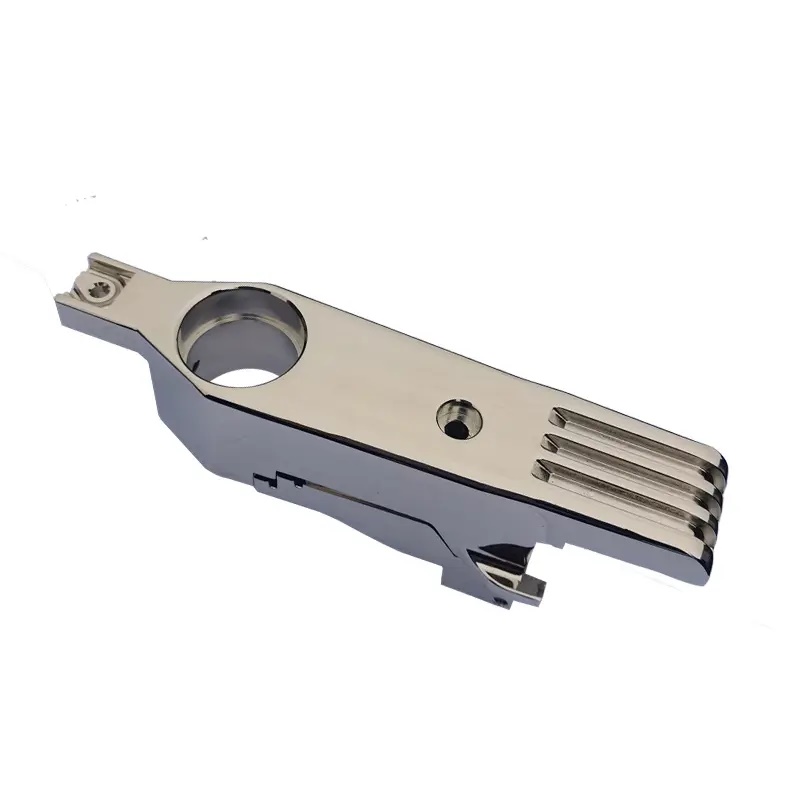
El dato debe ser estable, repetible y estar relacionado con la posición final del montaje. Si el accesorio CNC se ubica en una superficie de fundición rugosa o inconsistente, la precisión del orificio puede variar entre lotes.
| Paso | Objetivo | punto de control |
|---|---|---|
| Guarnición | quitar la puerta y el flash | evitar daños cerca del área de sujeción |
| Ubicación del accesorio | establecer el dato de mecanizado | Utilice una superficie de fundición estable. |
| Perforación | crear agujeros de montaje | posición y profundidad del agujero |
| tocando | crear hilos | calibre de hilo y rebabas |
| control final | confirmar características de montaje | inspección de dimensiones y roscas |
Se deben marcar claramente el estándar de rosca, la profundidad del orificio, la tolerancia, las áreas sin recubrimiento y los límites de rebabas. Para pedidos de exportación, es útil un informe de inspección del primer artículo antes del mecanizado por lotes.
Páginas relacionadas:Mecanizado CNC para piezas de fundición a presiónySoporte de montaje mecanizado CNC.
| Método de característica | Ventaja | Limitación |
|---|---|---|
| función piloto de reparto | ayuda a localizar el mecanizado | normalmente no es la calidad final del hilo |
| Orificio perforado por CNC | mejor control dimensional | añade coste de mecanizado |
| Rosca roscada CNC | hilo de montaje utilizable | necesita inspección de calibre |
Los problemas de rosca a menudo surgen de requisitos de profundidad poco claros, rebabas en la entrada, recubrimientos en las roscas o datos de mecanizado inconsistentes. Una nota en el dibujo, como el estándar de rosca, la profundidad efectiva y el área sin recubrimiento, puede evitar muchos problemas.
Dependiendo del dibujo, la inspección puede utilizar calibres de rosca, calibradores, calibres de altura, accesorios personalizados o verificación de CMM. Para piezas con múltiples agujeros, un simple accesorio de montaje puede revelar rápidamente problemas prácticos de ajuste.
Los compradores suelen solicitar una posición ajustada del orificio después de la fundición, pero la pregunta más importante es cómo se ubicará la pieza durante el mecanizado CNC. Si el accesorio se ubica desde una superficie de fundición rugosa que cambia de un lote a otro, la posición del orificio puede variar incluso cuando el programa CNC sea correcto. Se debe seleccionar una referencia estable a partir de una superficie que sea repetible o mecanizada primero.
Para un soporte de montaje, el proveedor puede primero mecanizar una superficie plana y luego usar esa superficie como referencia para taladrar y roscar. Para una carcasa, una protuberancia fundida o una pared exterior pueden no ser lo suficientemente estables a menos que estén diseñadas para la ubicación del accesorio. Es por eso que DFM debería incluir el mecanizado, no solo la fundición.
| Problema | causa probable | Mejor control |
|---|---|---|
| los agujeros cambian entre lotes | dato de fundición inestable | definir el dato de mecanizado y el método de fijación |
| calibre de falla de hilos | rebabas o recubrimiento en hilo | inspeccionar después del proceso final |
| agujero atraviesa la pared | diseño insuficiente de pared o saliente | revisar la geometría del jefe antes de utilizar las herramientas |
Teléfono:+86 18868921505
Correo electrónico:lijianguo@cxhuabo.com
Dirección: Y iheng road, ciudad de Changhe, ciudad de CI, ningbo, provincia de Zhejiang, China

escanear wechat
Copyright © 2022 Cixi Huabo Machinery Co., Ltd
Mapa del sitioEste sitio web utiliza cookies para garantizar que obtenga la mejor experiencia en nuestro sitio web.

 English
 Pусский
 Français
 日本語
日本語



 Whatsapp
 Teléfono
Comentario
(0)